Weaving has been around for centuries and evidence of it can be found in every civilization. It is a simple process of weft threads (that run horizontally across the fabric) going over and under warp threads (that run vertically through the fabric) interlacing at right angles to form fabric. But in its simplicity, weaving requires a large amount of both knowledge and skill. I use a floor loom which allows my hands and feet to work together. A project begins by deciding what I want to make. Next comes the mathematical calculations of length, width, take up, shrinkage and ends per inch. The thickness and fiber content of the yarns influence the decisions I make at each turn and can completely change the outcome.
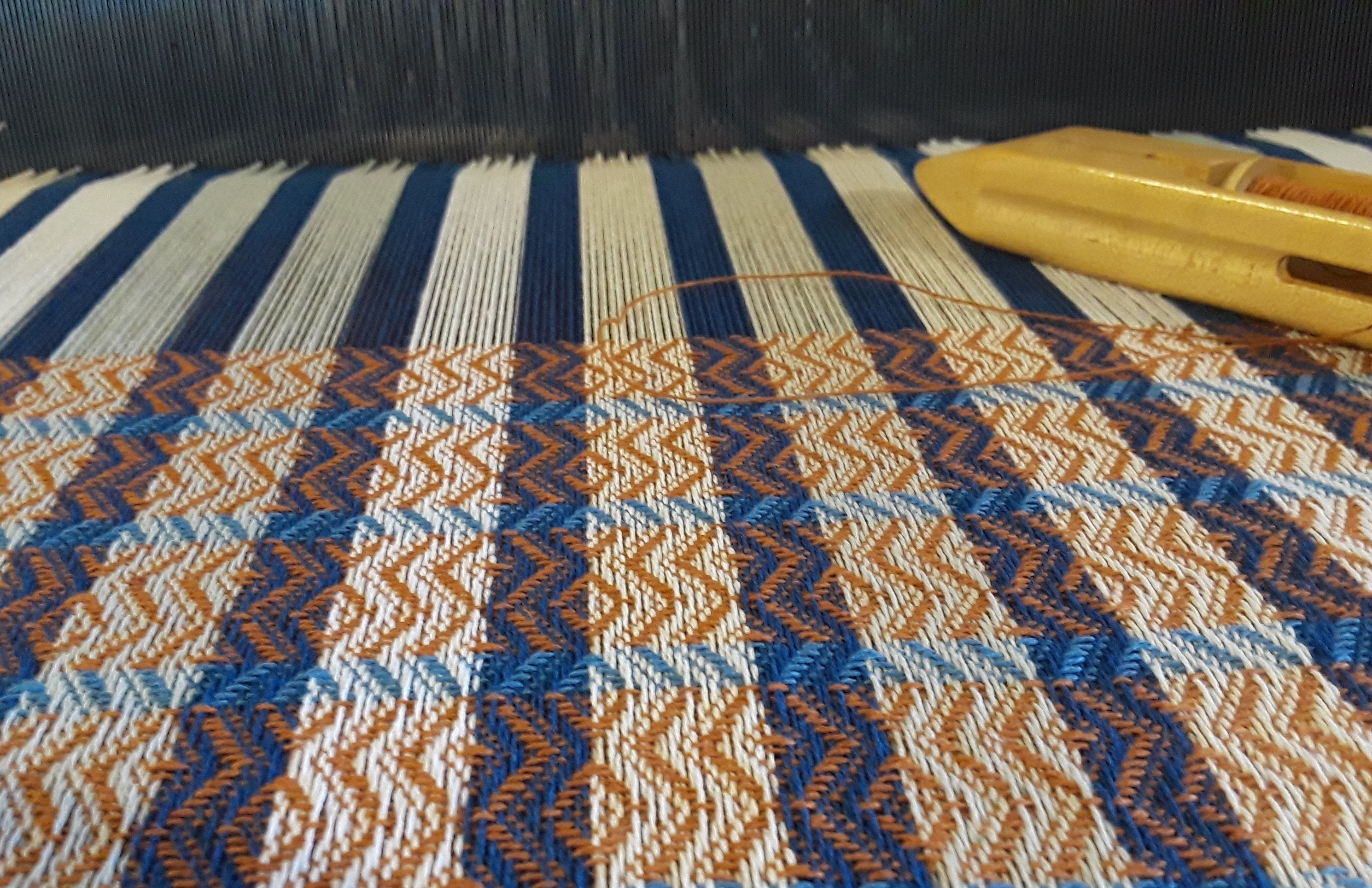
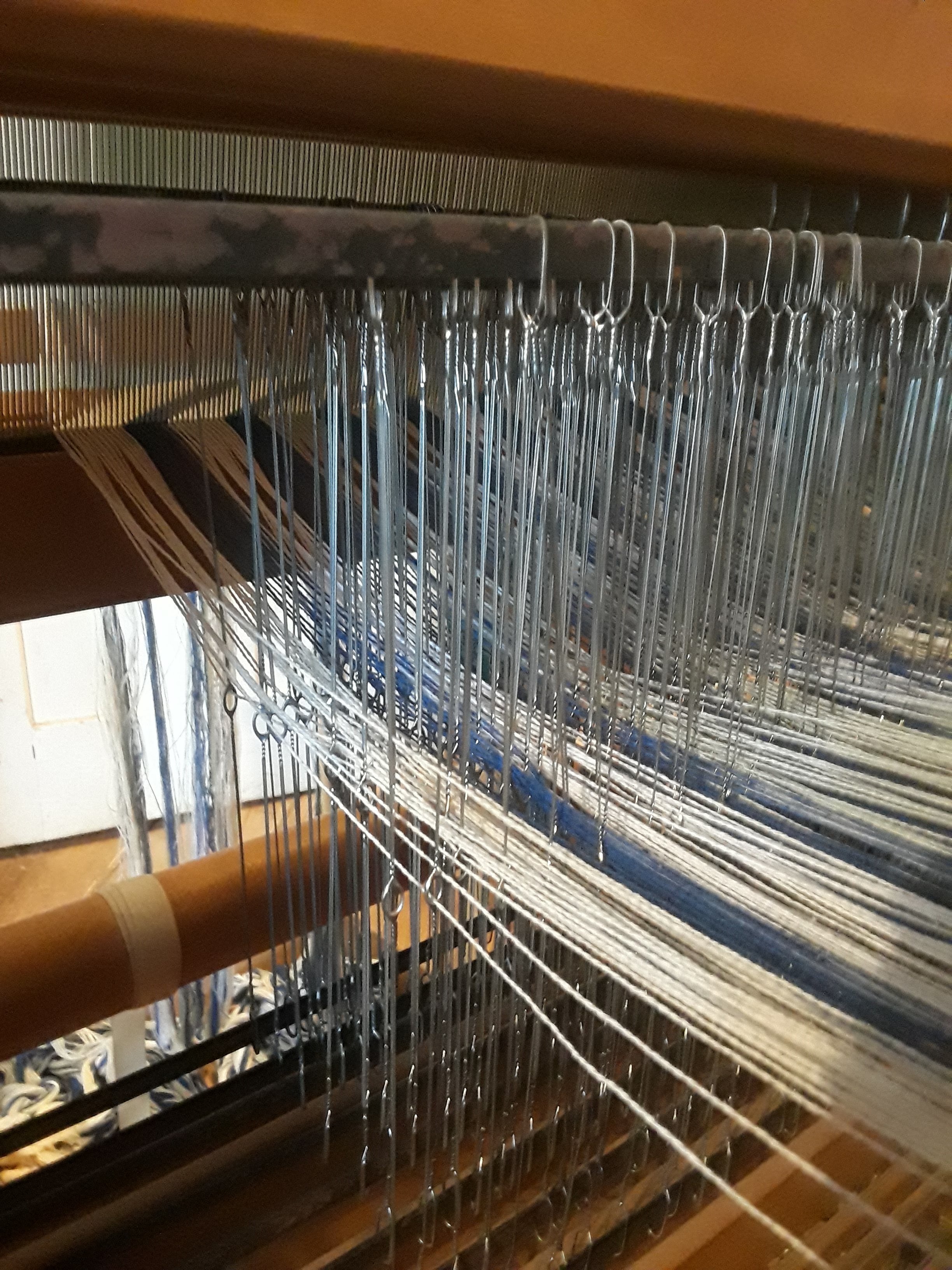
Other considerations are color choice and weave structure. Once the fabric is designed and all the calculations are complete, I wind the warp. Each yarn must be individually threaded through the loom's reed and then again through the heddles. The yarn is tied to the back beam, carefully wound onto the loom to prevent breakage and tied again on the front beam in order to hold the warp under tension. The heddles are used to create different patterns and are lifted individually or in groups by pressing the treadles with your feet. Your hands throw and catch the shuttle increasing the size of your fabric one thread at a time. Beat it into place and then on to the next thread. It is a slow process that requires patience and focus, but is meditative in nature. I think that meditation is what brings me back to the loom.